YUNTONG (TIANJIN) INDUSTRIAL CO.,LTD

China Heavy Load AGV Manufacturers: What Buyers Should Confirm Before Selecting a Supplier
Selecting among China heavy load AGV manufacturers requires more than comparing a stated load capacity and purchase price. For heavy industrial transport, the AGV has to be evaluated together with the workpiece, transport route, production process, loading method and site conditions.
A vehicle that can carry a specified weight is not automatically suitable for every workpiece at that weight. Large components may differ significantly in length, width, support points, center of gravity and handling requirements. Buyers should therefore prepare project data before asking manufacturers to recommend a configuration.
YUNTONG (TIANJIN) INDUSTRIAL CO., LTD. was founded in 2008 and began developing heavy-duty AGVs in 2012. According to the provided company information, the company has delivered heavy-duty AGVs with a maximum single load of 240 tons and provides technical support for projects in the 10–1000 ton range.
Start with the Workpiece, Not Only the Required Tonnage
Load capacity is an obvious starting point, but it should not be the only specification sent to an AGV manufacturer.
Two workpieces with the same total weight can create very different transport requirements. Before configuration begins, buyers should provide the actual characteristics of the material or equipment to be transported.
Useful project information includes:
– Workpiece weight
– Overall length and width
– Workpiece height where relevant to the project
– Support or contact locations
– Loading and unloading method
– Required transport frequency
– Available drawings
– Available photographs of the workpiece
If the workpiece changes between production stages, this should also be explained. The manufacturer can then evaluate the project around the actual operating requirement rather than a single tonnage figure.
Confirm the Transport Route Before Comparing AGV Solutions
Heavy-load transport equipment operates as part of a production or logistics process. The route can influence the required vehicle configuration and should be reviewed before a buyer accepts a proposal.
A useful route description should identify:
– Starting point
– Destination
– Available travel width
– Turning areas
– Intersections with other production activities
– Loading and unloading locations
– Indoor or outdoor operating sections
– Any restricted areas
– Existing drawings of the site
Buyers should avoid assuming that a configuration used in another factory can be copied directly. Even when the transported workpiece is similar, the available route and production layout may be different.
How Does the AGV Fit into the Production Process?
For large workpieces, transport is usually only one part of a larger production sequence. Before ordering equipment, buyers should clarify what happens immediately before and after each AGV movement.
Questions worth discussing with the manufacturer include:
– Where does the workpiece come from?
– How is it transferred onto the AGV?
– Where must it be positioned after transport?
– Does the transport task connect multiple production or assembly stages?
– Are there existing machines or stations that affect the operating sequence?
– Is the AGV required for production, assembly, transportation, storage or a combination of these tasks?
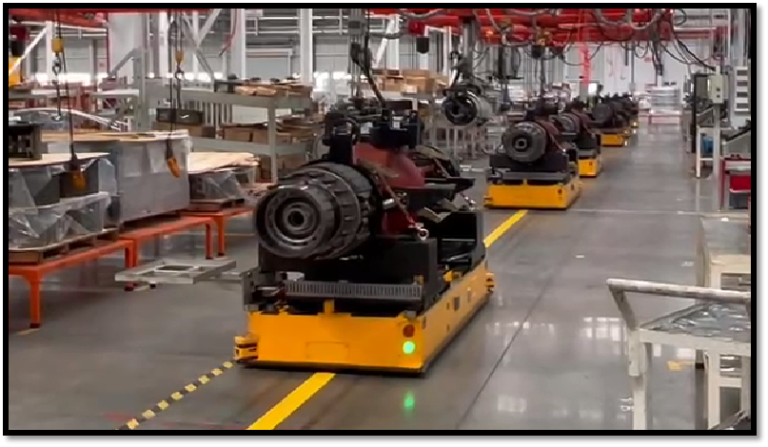
YUNTONG products and services cover the production, assembly, transportation and storage of large workpieces in fields including aerospace, military industry, high-speed rail, wind power, ships and heavy trucks.
This application range does not mean that one AGV configuration is suitable for all of these sectors. Each project still requires technical evaluation based on its own workpiece and process.
Compare Engineering Scope, Not Just the Vehicle
When evaluating China heavy load AGV manufacturers, buyers should determine what exactly has been considered in each proposal.
A quotation based only on approximate load information may not be directly comparable with one based on detailed drawings and route conditions.
Supplier Comparison Checklist
– Has the manufacturer received the actual workpiece dimensions?
– Has the required load been confirmed?
– Has the transport route been reviewed?
– Are loading and unloading conditions understood?
– Has the production process been explained?
– Are site limitations clearly identified?
– Is the proposed configuration based on project-specific information?
– Which specifications still require technical confirmation?
– Which drawings must be approved before production?
– What information is excluded from the current evaluation?
The objective is not to find the proposal with the largest number of specifications. The objective is to determine whether the proposed AGV has been evaluated for the actual task.
Do Not Copy Specifications from Another Heavy Load AGV Project
Heavy-duty AGVs are frequently project-specific. A specification seen in a case study, product photograph or previous project should not automatically be treated as a purchasing specification.
Workpiece geometry, support conditions, route dimensions and production requirements may all differ.
If a parameter has not been confirmed for the current project, buyers should request project-specific evaluation rather than using data from another application.
Common Mistakes When Sourcing Heavy Load AGVs
Comparing only maximum load capacity
A larger stated capacity does not by itself confirm whether a vehicle is suitable for a particular workpiece and route.
Sending only the workpiece weight
Without dimensions, drawings and support information, technical evaluation may remain incomplete.
Ignoring the factory route
Available travel space and the relationship between transport and surrounding production areas should be discussed before final configuration.
Treating a reference project as a standard model
A solution delivered for one application should not automatically be copied to another project.
Requesting a final quotation before project data is stable
If the workpiece, route or operating requirements are still changing, the configuration may also require further evaluation.
What Information Should Buyers Prepare Before Requesting a Quote?
A more complete inquiry helps both buyer and manufacturer move from a general product discussion to technical evaluation.
Required Project Information
– Workpiece description
– Required load
– Workpiece dimensions
– Available drawings
– Required quantity
– Transport route drawing
– Loading location
– Unloading location
– Application stage
– Indoor or outdoor operation
– Production or transport sequence
– Known site restrictions
– Any existing equipment that must interface with the transport process
If some information is not yet finalized, identify it as preliminary instead of presenting an estimate as a confirmed specification.
FAQ
What is the maximum single load already delivered by YUNTONG?
According to the provided company information, YUNTONG has successfully delivered heavy-duty AGVs with a maximum single load of 240 tons.
Does YUNTONG support projects above 240 tons?
The provided information states technical support for the 10–1000 ton range. The actual solution for a specific project requires technical evaluation and should not be determined from tonnage alone.
Which industries can use YUNTONG heavy-duty AGVs?
The provided company information identifies applications involving large workpieces in aerospace, military industry, high-speed rail, wind power, ships and heavy trucks.
Is workpiece weight enough to request an AGV quotation?
Weight is important, but buyers should also provide workpiece dimensions, drawings, route information, loading conditions and operating requirements whenever available.
Can specifications from an existing AGV project be reused?
They should not be copied without evaluation. The current workpiece, route and process conditions need to be checked independently.
Conclusion
Choosing among China heavy load AGV manufacturers should begin with the transport task rather than a catalogue specification. Workpiece dimensions, required load, route conditions, loading method and production sequence provide the basis for meaningful technical discussion.
For a heavy-load AGV project with YUNTONG, buyers can prepare the workpiece weight and dimensions, drawings, required quantity, route layout, loading and unloading positions and operating process. These details allow the technical team to evaluate the project requirements before the configuration and quotation are finalized.